
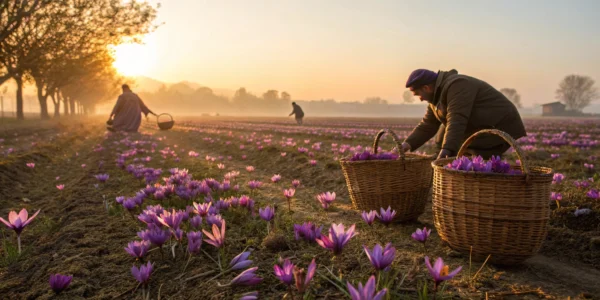
Imagine a crisp fall morning in Iran, fields dotted with purple saffron flowers, baskets in hand, and the air buzzing with the promise of a good harvest. Iran produces over 80% of the world’s saffron, and its harvest season is a delicate dance of timing and care. From mid-October to mid-November, farmers work hard to gather these precious blooms at just the right moment. Here’s a simple guide to the saffron harvest season, with tips to make the most of it, based on real insights from the fields.
Quick Points
- Timing is Everything: Harvest starts in mid-October, peaks in mid-November, and lasts 20-25 days.
- Early Morning Wins: Pick before sunrise for the best quality and easiest gathering.
- Handle with Care: Quick picking and processing keep saffron threads top-notch.
When Does the Harvest Happen?
In Iran, the saffron harvest season kicks off in mid-October, when the soil cools to around 8°C, about two weeks after the first irrigation. The flowers bloom for 20 to 25 days, with the peak between the 15th and 20th day—around mid-November. This window is key for getting the most saffron. In regions far from Khorasan Province, some farmers harvest around noon or afternoon, but the best results come from sticking to the early morning. In places like Vermont, the season stretches from late October to November, often lasting 4-6 weeks depending on the weather.
- Grower’s Tip: Mark your calendar for mid-October. Check soil temperature with a thermometer to catch that 8°C mark.
How Harvesting Works
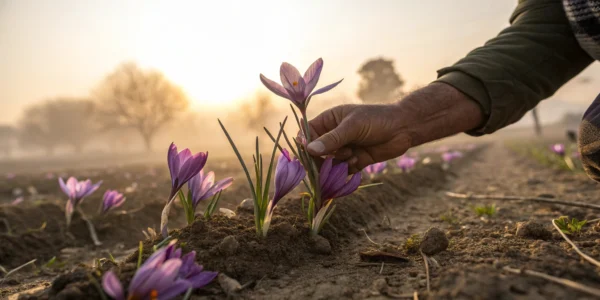
Every morning, families head to the fields with empty baskets, ready to pick blooming saffron flowers. They use their thumbnail and index finger to cut the flower at the base, ensuring the whole flower comes off cleanly—only fresh, clean blooms should be picked, leaving any dirty or moldy ones behind. They return home with baskets full of delicate purple blooms, then carefully separate the three parts: the red saffron threads (stigmas), yellow stamens, and purple petals. This hands-on method, called manual harvesting, keeps the flowers safe and ensures high quality. The stigmas are the saffron we know, but the stamens and petals can be dried and used as dye, giving growers an extra way to earn.
For a hectare planted with 10 tons of corms (each 8-12 grams), you can expect about 8 kilograms of saffron—a solid yield for the effort. Some larger farms use machines, like Spanish models, backpack harvesters, or cart-mounted devices, to speed things up. But most small growers stick to manual methods for better control and care.
- Grower’s Tip: Use breathable wicker baskets or wide trays to keep picked flowers cool and fresh—don’t pile them too deep, or the weight will crush the blooms below and condensation can form, harming the saffron.
The Best Time to Pick
The optimal harvest time is before sunrise, when flowers are fully elongated and just beginning to open. At this stage, the stigmas are at their longest and most developed, maximizing yield since each stigma weighs just a fraction of a gram. If you pick too early, when flowers are still closed and short, the stigmas won’t be fully grown. If you wait too long and the flowers wilt, the stigmas can shrivel or get dirty, and picking becomes harder. Early morning harvesting also keeps the saffron quality high, with better color and flavor, because sunlight hasn’t had a chance to break down the crocin content—the stuff that gives saffron its vibrant hue and taste. In hot climates like Iran, picking before the sun rises also helps harvesters avoid the heat.
Flowers have a short shelf life of just 3-4 days. If you don’t pick them in time, they’ll wilt, and their quality drops fast. Worse, if today’s blooms are left on the plant, tomorrow’s flowers might not even get a chance to open up. Early in the season, when only a few flowers are ready, you can pick every other day to save time. But at the peak, daily picking is a must—don’t delay more than 2-3 days, or you’ll lose quality and yield.
- Grower’s Tip: Set your alarm early—aim to be in the fields by 4 or 5 AM. Check that flowers are just starting to open before you pick, and flick gently to shoo away any bees or butterflies visiting the blooms.
Weather Challenges to Watch
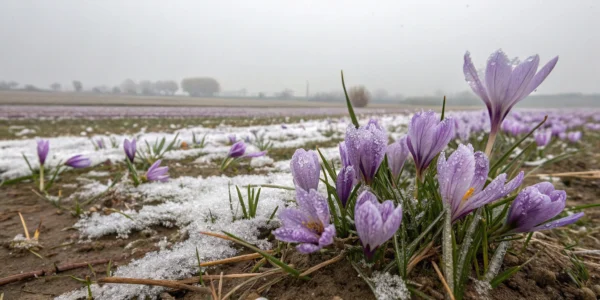
Weather can throw a curveball during harvest, especially in cooler regions like Vermont. If there’s heavy dew, residual rain, or even snow, wait a few hours until the flowers are dry and thawed before picking—wet flowers can degrade quality. If it’s raining, you might need to wait a day until it stops. An early snowfall can pause flowering, but it often resumes when temperatures rise. However, prolonged freezing after a snowstorm can stop flowering entirely for the season, as happened one year in Vermont, cutting yields significantly.
- Grower’s Tip: Keep an eye on the forecast. If snow or rain hits, wait for flowers to dry out, but don’t delay too long—those 3-4 days of freshness won’t wait.
Why Speed and Care Matter
Once the flowers are picked, time is ticking. The sooner you separate the stigmas from the petals and stamens, the better. If you wait too long, the flowers get limp, making it harder to pull out the stigmas, and yellow pollen can stick to the red stigmas, muddying the flavor and color. Sunlight exposure also fades the threads, lowering their crocin levels and overall quality. That’s why farmers work fast to process the flowers right after picking. Some growers even use tweezers to separate stigmas right in the field, leaving the petals and stamens behind if they only want the saffron—it’s more bending, but it can save time.
If you can’t process right away, spread the flowers on a paper towel on a tray and store them in the refrigerator to keep them fresh. While picking, you might spot honey bees, bumblebees, butterflies, or hover flies deep in the flowers—saffron is one of the only plants blooming in late fall, making it a vital food source for these beneficial insects. A gentle flick of the flower usually sends them on their way peacefully.
- Grower’s Tip: Set up a shaded spot near the field to start separating threads as soon as your baskets are full. If you’re delayed, refrigerate the flowers to buy some time.
Simple Steps for a Great Harvest
Here’s how to make your saffron harvest a success:
- Start on Time: Begin in mid-October when soil hits 8°C, and aim for the mid-November peak.
- Pick Early: Harvest before sunrise when flowers are just opening, and keep them fresh and dry.
- Work Fast: Don’t let flowers sit—separate threads quickly to avoid pollen contamination.
- Store Smart: Use breathable baskets or trays, and don’t pile flowers too deep to avoid crushing.
- Know Your Region: If you’re outside Khorasan, adjust timing but stick to early mornings when possible. In cooler areas, wait out rain or snow until flowers dry.
Wrapping Up
The saffron harvest season in Iran—and even in places like Vermont—is a short but magical time, where every morning counts. By picking at the right time and handling the flowers with care, farmers can get the best saffron—bright, flavorful, and ready to shine in dishes worldwide. Plus, supporting late-season pollinators and using petals for dye adds even more value to this special crop. It’s hard work, but seeing those baskets fill up with purple blooms makes it all worth it, one delicate thread at a time.
Research Behind the Tips:
https://www.uvm.edu/~saffron/pages/factsheets/HarvestingSaffronAugust2021.pdf
https://dehkadeco.com/harvest-saffron/